
Cover Story
Gokarna – Karnataka’s New Getaway
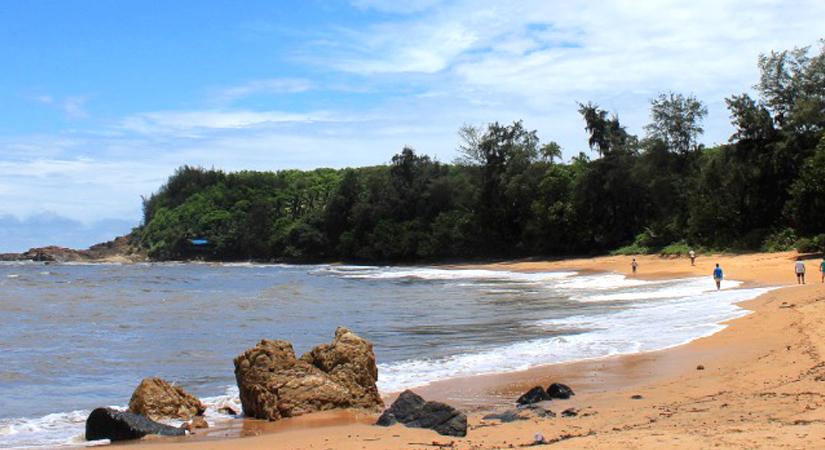
The name Gokarna, literally meant a ‘Cow’s Ear’-- ‘Go’ meaning cow and ‘Karna’ meaning ear
ByShona Adhikari
September 11, 2019 (IANSlife) With its exotic beaches and sacred shrines, as a tourist getaway, Gokarna is one of Karnataka’s lesser known treasures. This magical part of the state steeped in religious folklore, has some of India’s most spectacular beaches and is becoming a popular tourist getaway. It has all that is necessary for a holiday destination - blue seas and beaches with clean sand, coconut palms, banana and other fruit trees. The drive up the winding path that leads to Gokarna is scenic, with the Western Ghats on one side and the Arabian Sea on the other. It has a laid-back atmosphere, with two streets that are lined with shops and traditional tile-roofed brick houses.
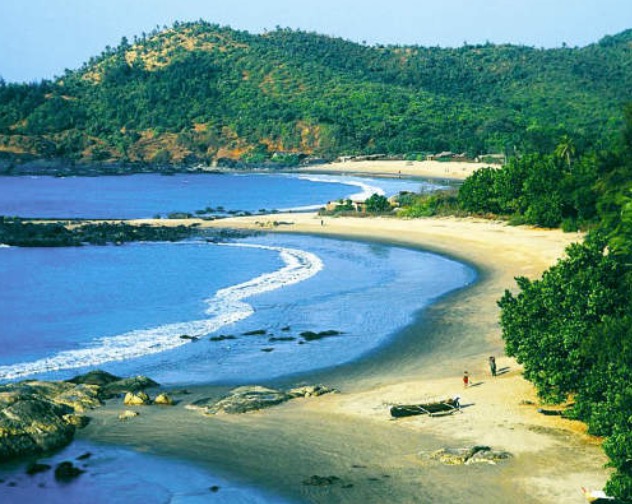
Located north of Mangalore and about 50 kms south-west of Karwar, Gokarna is a small temple town on the western coast of India. The name Gokarna, literally meant a ‘Cow’s Ear’- - ‘Go’ meaning cow and ‘Karna’ meaning ear. Discovered just two decades or so ago. It was earlier a charming
hamlet with just one street, but has since acquired two new roads to add shops restaurants and hotels for visitors.
The ancient Mahabaleshwar Temple, is located on the only road that existed earlier, is lined on either side by wooden houses – some with carving, some plain, some painted some left natural and unpainted – with terra-cotta tiled roofs. There is also a huge tank here known as ‘Koti Tirtha’,
considered sacred by pilgrims – the belief being that one becomes free of rebirth by taking a dip in its holy waters.
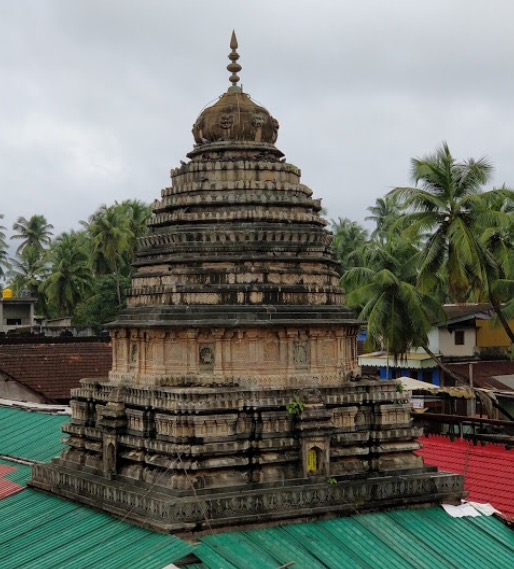
Dedicated to Lord Shiva, who is also worshipped as ‘Mahabaleshwara’, the ‘Atma Linga’ in the temple sanctum, attracts pilgrims by the thousands. The temple is said to be second only in sanctity to the Vishwanath Temple at Varanasi and attracts devotees who perform puja for their departed
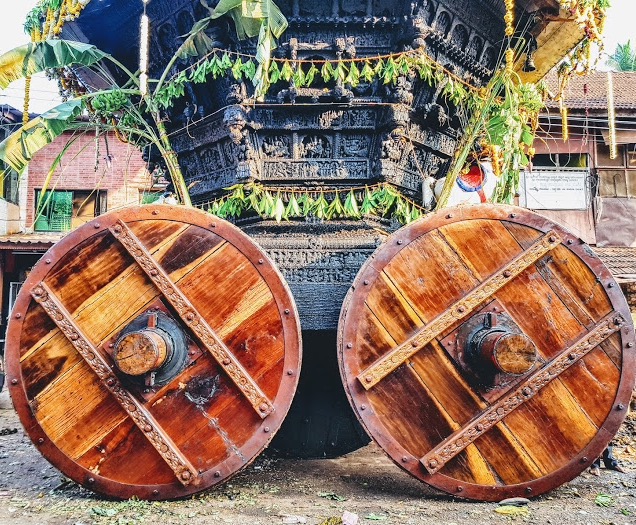
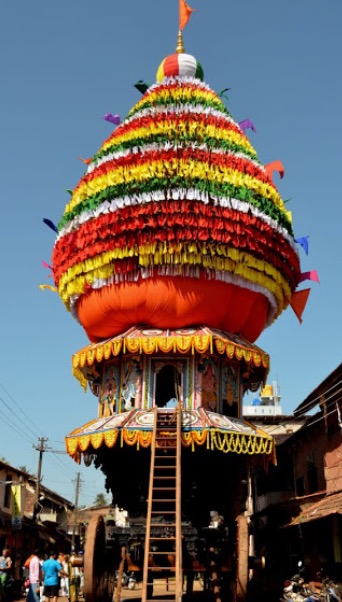
ancestors. The temple is managed in a rather interesting manner by two Brahmin sects, who live on either side of Gokarna’s temple street. Each group has a three year stint by rotation, during which they look after all the activities connected with the temple. The temple’s main festival Shivaratri, is celebrated over nine days, during which Gokarna attracts a huge number of pilgrims. On the last day of Shivaratri, an enormous temple chariot with Shiva’s image is pulled by ropes from the Maha Ganapati Temple, another temple down the road by more than a 100 pilgrims.
A commonly known legend is that Brahma had sent Shiva to Pataloka (the netherworld) to perform penance and Shiva is believed to have emerged through the ear of a cow – said to be Prithvi or the ‘Ear of Mother Earth’. Having finally returned from Pataloka the spot was blessed and named Gokarna. The spot is said to be the confluence of two rivers, the Gangavali and Aghanashini. A saying from an ancient text
states, “A visit to this holy place is enough to cleanse the devotee of hundreds of sins.”
Known as one of the seven important Hindu pilgrimage centers, Gokarna is located on what was once an unspoiled beach near the estuary of the river Aghanashini. Besides the ancient Shiva Temple, there are many other temples all over this small town, most of them dating back two or more centuries. Among the more important ones are the Maha Ganapathi Temple (Ganesh) , the Uma Maheshwara Temple (Shiva-Parvati), the Bhadrakali Temple (Kali), the Venkataramana Temple (Vishnu ) and in the midst of all these temples lies the Koti Thirtha – a large man-made tank.
Due to its laid-back unspoiled and rustic nature, Gokarna tends to attract younger tourists. The four white sandy palm-fringed beaches of Gokarna, are spectacular enough to have begun attracting beachcombers from abroad. The one kilometre-long palm fringed ‘Kudle Cove’ with its splendid
beach is closest to Gokarna and offers shacks on rent and can be reached after a 20 minute walk.
Beyond a jutting headland and a one-hour walk away is ‘Om beach’ – a cove, where the beach is shaped like the auspicious ‘Om’ symbol. Om Beach also has a few shacks and eateries, as well as a boat service to take visitors to two other small beaches known as ‘Paradise’ and ‘Half Moon’.
The closest towns to Gokarna are Ankola and Kumta on the NH 66, while trains stop at the nearby railway stations at Bhatkal and Karwar. The most convenient station is the Gokarna Road station, 6 km from the town. Now with the influx of tourists, the character of the town has undergone a
change and is no longer just a centre of pilgrimage, though large numbers of devotees continue to visit the main temple to offer prayers to Lord Shiva.
(This article is a website exclusive and cannot be reproduced without permission of IANSlife)
Shona Adhikari is a lifestyle and travel columnist.
Editing by Muskan Aggarwal and N. Lothungbeni Humtsoe