
Cover Story
New experimental art and architecture space launched in Mumbai
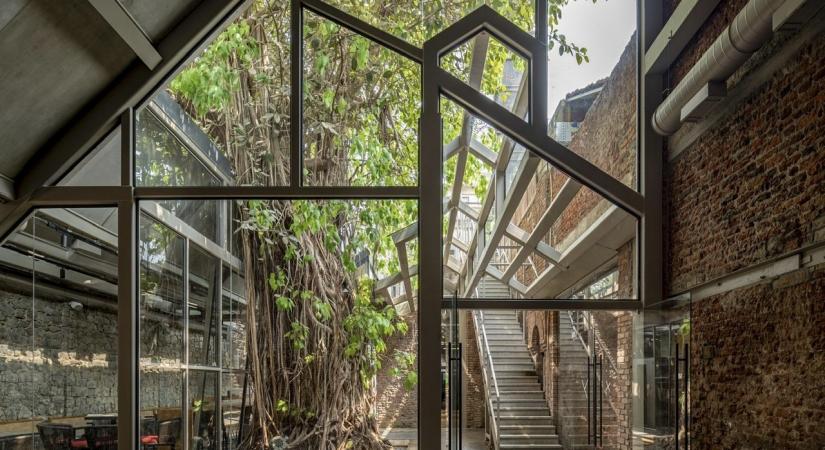
A space that blends its past and the future and houses exhibition spaces, a library, a restaurant & a cafe
BySukant Deepak
April 19, 2022 (IANSlife) ‘IF.BE’ recently launched their new experimental architecture and art space in a re-fashioned and conserved Ice Factory on April 17. Situated in Mumbai’s oldest dockyards in Ballard Estate, ‘IF.BE’ has been revamped into a space that blends its past and the future and houses exhibition spaces, a library, a restaurant, a cafe and a performance venue.
It has been launched with a two-week exhibition titled Refraction: The (Re)Making of the Ice Factory curated by Arjun Malik and Parul Thacker, which features the past and present architecture of the Ice Factory.
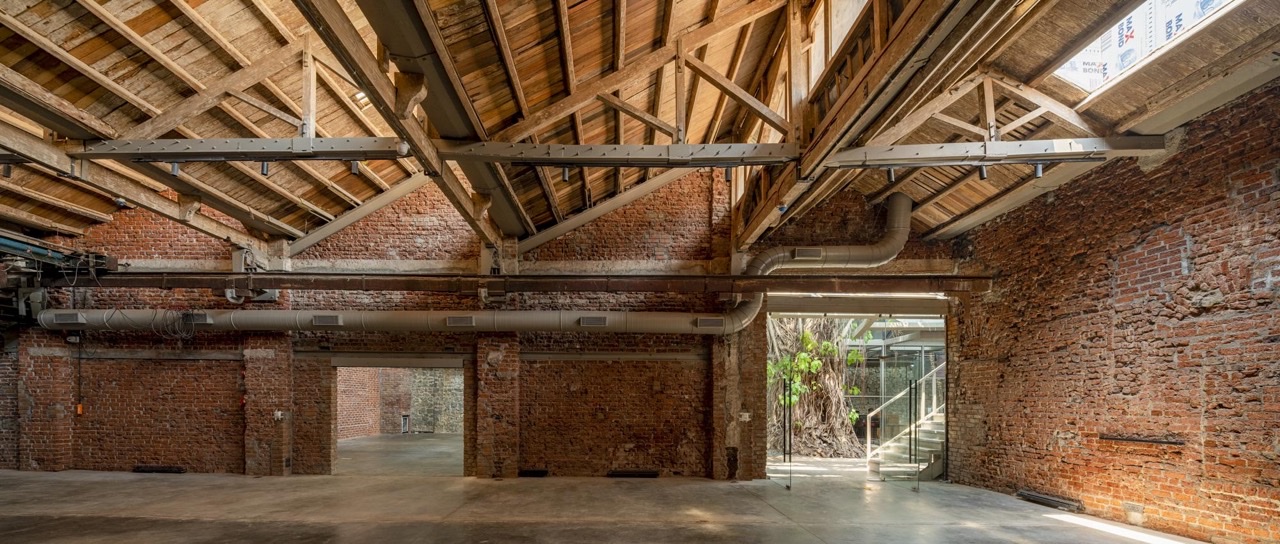
Partners Kamal Malik, Abhijit Mehta and Amardeep Tony Singh hope that this initiative will enable them to preserve Ballard Estate’s industrial heritage by offering glimpses of the building's past, be it ice freezing apparatus preserved under glass at the entrance or maintaining the building’s functioning overhead crane. The space is designed by architects Arjun and Kamal Malik, and will be made up of five spaces. ‘The Substation’ will be used as a reading room for art, architecture and design material; ‘The Cathedral’ will function as an exhibition space; ‘The Banyan Tree Cafe’ situated under the shade of an ancient banyan tree is an all-day cafe committed to wholesome and healthy eating; ‘Native Bombay’, a restaurant and bar, will offer a contemporary spin on regional Indian cuisine and ‘The Ice Factory’ will be a performance venue which will be used for architecture-led exhibitions, film screenings and performances to conferences, workshops and private events. IF.BE has been designed to be fluid so the spaces can be easily reconfigured depending on the nature of the
event or performance.
Kamal Malik says, “The acronym IF.BE was coined to pay homage to the location's rich heritage. It also alludes to the independent words ‘IF’ [suggestive of endless possibilities and a sense of wonder] and ‘BE’ [a counterweight that provides balance and (re)solutions.] IF.BE represents a platform where existing behaviours and perceptions are challenged, where open dialogue moves from the currently trending to the truly relevant, where pluralism, self-expression and innovation abound, where architecture, design and the arts finally move beyond their own aesthetically bound definition to becoming instruments that drive holistic and enduring change.”
(This article is website exclusive and cannot be reproduced without the permission of IANSlife)
Sukant Deepak can be contacted at sukant.d@ians.in